What Japan's dissolution of the church is, and what it is not.
The Unification Church calls Japan's dissolution of its Japanese branch religious persecution. The court record describes something narrower: a response to documented conduct, the coerced donations and spiritual sales that harmed thousands of families, not to anyone's belief. A look at where the principled line actually falls, and why the persecution framing asks members to set aside the very value their faith teaches.
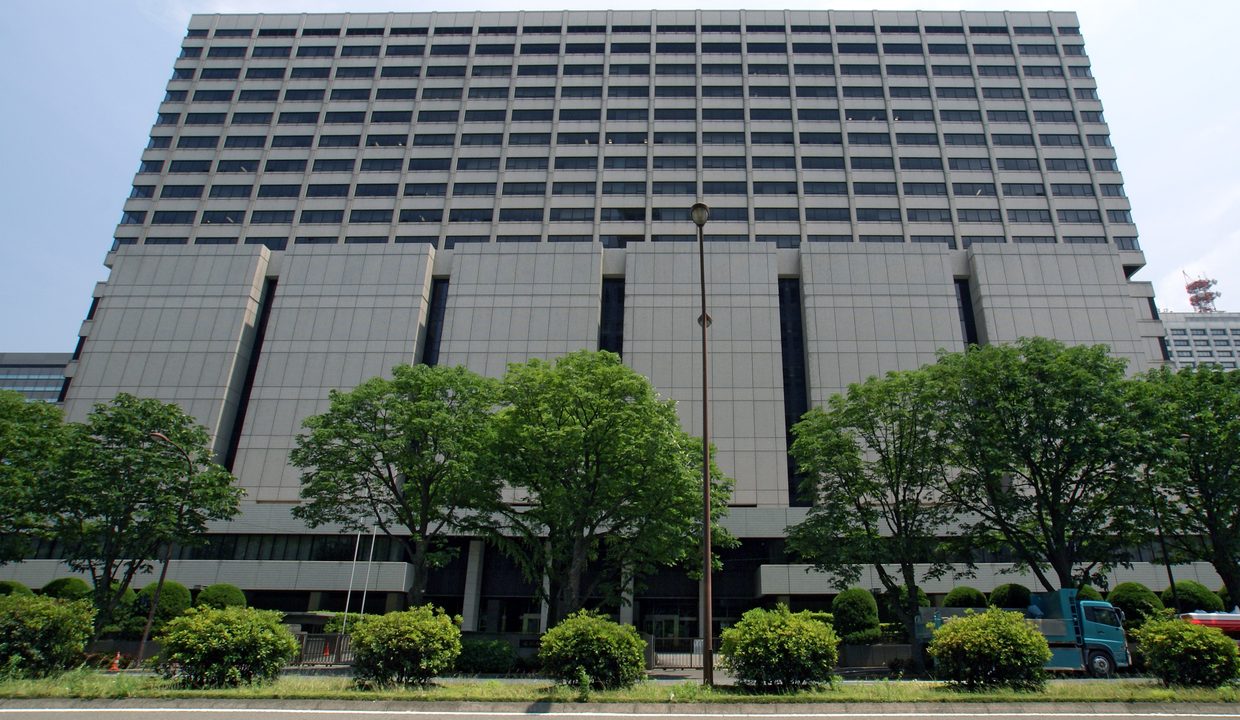
Photo by 663highland, licensed CC BY 2.5, via Wikimedia Commons.
- 01 What the courts actually did
- 02 The conduct the order rests on
- 03 What the church says
- 04 The line, and the value
Jump to a section, 4 in this article open ↓
Two hundred and forty years ago, writing about religion in Virginia, Thomas Jefferson set down the line that still does most of the work in how free societies treat belief. “The legitimate powers of government,” he wrote, “extend to such acts only as are injurious to others. But it does me no injury for my neighbour to say there are twenty gods, or no god. It neither picks my pocket nor breaks my leg.” 1 The statute he drafted, enacted in 1786, put it into law: belief is free, and the magistrate's power reaches only conduct that harms the peace and rights of others. 2
Hold that line in mind, because it is the one Japan's courts just drew.
The movement teaches its members to root out self-centeredness, putting your own wants ahead of others' needs, serving yourself rather than the whole. It is one of the faith's own names for the fault a member is taught to overcome.
What the courts actually did
In March 2025 the Tokyo District Court ordered the Family Federation, the body most people still call the Unification Church, dissolved as a religious corporation in Japan. 3 In March 2026 the Tokyo High Court upheld that order; the church has asked the Supreme Court to hear a final appeal. 4 The courts did not act against anyone's belief. They acted under the Religious Corporations Act and the Civil Code, on a finding of tort: that the church's methods of soliciting donations “violate the rights of others” and significantly harm the public welfare, a pattern the District Court called extensive and continuous, supported by dozens of civil judgments and decades of settlements. 5
It is worth being exact about what a dissolution is, because the word sounds total and is not. Stripping a group's status as a religious corporation removes its legal scaffolding: the tax advantages, the standing to hold and gather money as a recognized religious body. It does not outlaw the faith, deport anyone, or forbid members to believe, gather, or worship. The precedent is plain. When Japan dissolved Aum Shinrikyo in the 1990s, the group did not vanish; it continued, under a new name, as a religion its members were still free to practice. 6 What a dissolution takes is the corporate charter, not the creed.
The conduct the order rests on
What, then, was the documented conduct? The record describes a machine for converting religious obligation into money, aimed hardest at the people least able to refuse.
In the church's theology, spiritual debts are paid by “indemnity”, a condition a person makes to be restored to a right standing. 7 In practice, in Japan, that condition was money. Members and their families were pressed to give beyond their means; the government's Agency for Cultural Affairs put the confirmed harm at more than 20 billion yen affecting over 1,500 people, 3 and the lawyers' network that has tracked it for decades counts cumulative damages above 123.7 billion yen across 34,537 consultations. 17 The case that forced the issue into public view was the 2022 assassination of former prime minister Shinzo Abe by a man whose mother had given the church roughly 100 million yen and gone bankrupt. 8
The pressure ran on two tracks, and they are worth keeping apart, because they fell on two different sets of people.
One track ran inward, on the church's own members, through the doctrine of indemnity and its ceremonies for the dead. Members were pressed to pay to liberate their ancestors, line by line and generation by generation (the passage below works the numbers). And members were not billed alike. The church frames Japan as the “Eve nation,” indebted to Korea, the “Adam nation,” in atonement for Japan's 1910 to 1945 colonial occupation; 9 on that theology Japanese members owe more, and by Reuters' reporting the fee structure charged them several times what Korean members were asked to give. 10 The burden attaches to being Japanese, not to living in Japan: the thousands of Japanese church members who married into Korea carry it there too. 11 Whatever one makes of the theology, one nation's believers were assessed more than another's, and that is a fact.
The other track ran outward, on people who had never joined. Members fanned out to sell high-priced objects, marble vases, ivory seals, miniature pagodas, “represented as having supernatural powers,” in the practice Japan came to call spiritual sales. 12 It sought out the bereaved, frequently older widows, and it worked on grief: a stranger would explain that a dead husband or relative was suffering in the next world and could be released only by buying the object or paying for the ceremony. 11 A 1984 Washington Post investigation, citing former church officials, traced at least 800 million dollars out of Japan into the movement's American operations across nine years, most of it raised this way. 12 Japan, scholars and victims' lawyers say, has long been the movement's financial engine, 9 with billions of yen moving annually toward the church's Korean headquarters. 10
The arithmetic of indemnity. The church's own fee schedule for its Cheongpyeong ancestor ceremonies prices release one block of seven generations at a time: $70 a block along each of four ancestral lines, $700 for the first block of each line, back as far as 210 generations, with a separate Ancestor Blessing at a further $70 a block a hundred days later. 13 Carried to the full 210 generations, that is thirty blocks per line, liberated and then blessed: about $11,000 to liberate all four lines and roughly $8,000 more to bless them, close to $20,000 from a single member.
Two hundred and ten generations is some five to six thousand years. Population genetics has a settled result at that depth: trace any line of descent back far enough and the named ancestors stop being anyone's in particular. Within a single region the convergence is shallow, a few centuries to about a thousand years, beyond which a population shares essentially the same forebears; for humanity at large it is a few thousand. 14 So past roughly the first four or five of those thirty blocks, a member in Tokyo and a member in Seoul are paying to release the same individuals, and the church bills each of them in full. The remaining twenty-five-odd blocks, about $14,000 of the $20,000, pay to liberate ancestors a fellow believer has already paid to liberate, and whom the next believer will pay to liberate again.
This is what members pay; it is separate from the trinkets sold to the public. What it brings in cannot be totted up exactly: not every member pays, and many who do cannot afford to carry all four lines to the full depth, so participation and amounts vary widely. But the scale is not small. The movement has counted its Japanese membership in the hundreds of thousands; 15 as a rough estimate, if even one in ten worked the schedule to its end, that is on the order of thirty thousand members at roughly $14,000 apiece, four hundred million dollars and up, collected to release one shared ancestry: the same finite set of souls, sold once per paying descendant. The schedule is published; the genealogy is not in dispute.
What the church says
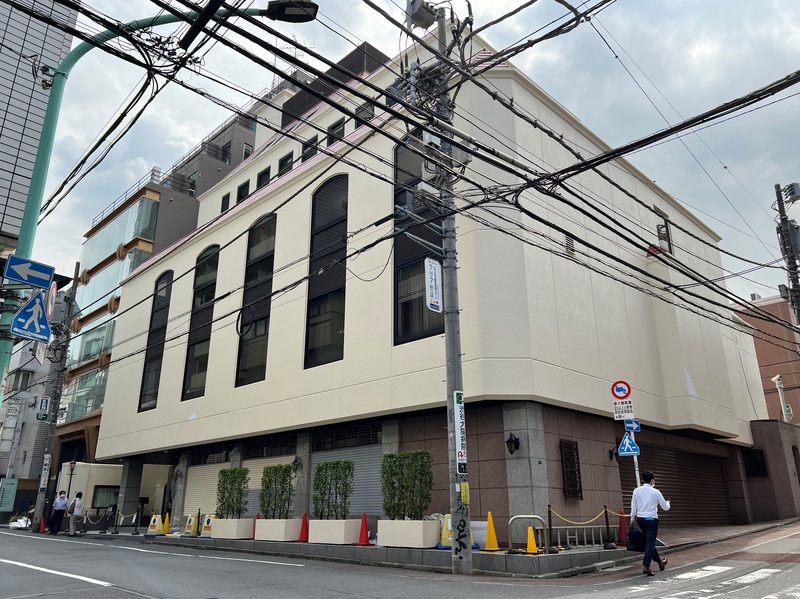
The Family Federation's headquarters in Shibuya, Tokyo. Photo by Asanagi, CC0, via Wikimedia Commons.
The church rejects all of this in the strongest terms. Its president, Tomihiro Tanaka, has called the dissolution “a serious threat to religious freedom” and accused the government of “fabricating damages.” 3 The Family Federation and affiliated bodies have framed the order as religious persecution and a blow to freedom of belief. 16 Those are the church's words, and they deserve to be on the page as its own account. They should be read against the record they answer: the courts found conduct, repeatedly, in case after case, and gave the church years to reform methods they ultimately judged it had not.
The line, and the value
This is where the faith's own teaching cuts against the persecution story. To read the dissolution as an attack on the church is to decide that the church's standing weighs more than the harm done to the families the courts counted, to set their losses aside because the mission is larger. But placing your own side's importance above the people it hurt is exactly the self-centeredness the faith tells its members to root out. So the persecution framing asks a member to do the one thing the teaching forbids, and to feel it as loyalty. The same person who is taught to put others first is being asked to put the institution first, and to call that faith.
None of this touches belief. A person remains free to hold that Sun Myung Moon was who the movement says he was, to gather, to pray, to give. What Japan's courts reached was conduct that, on the record, picked pockets, the Jeffersonian limit, and nothing past it. Freedom of religion is real and worth defending, and it has always included its companions: the freedom to question, the freedom not to believe, and the freedom to leave.
References.
- 1 Thomas Jefferson, Notes on the State of Virginia, Query XVII (Religion) · Notes on the State of Virginia (Query XVII), via Thomas Jefferson's Monticello / Thomas Jefferson Foundation (1785).The legitimate powers of government extend to such acts only as are injurious to others. But it does me no injury for my neighbour to say there are twenty gods, or no god. It neither picks my pocket nor breaks my leg.
- 2 Thomas Jefferson, An Act for Establishing Religious Freedom, 1786 (Document Bank of Virginia) · Document Bank of Virginia, Library of Virginia (1786).no man shall be compelled to frequent or support any religious worship, place, or ministry whatsoever ... nor shall otherwise suffer on account of his religious opinions or belief.
- 3 Mari Yamaguchi (Associated Press), Court in Japan orders dissolution of Unification Church · Associated Press (carried by PBS NewsHour) (2025).Church president Tomihiro Tanaka ... accused the government of fabricating damages and framed the dissolution as a "serious threat to religious freedom." ... The Agency for Cultural Affairs said settlements reached in or outside court exceeded 20 billion yen ($132 million) and involved more than 1,500 people.
- 4 Jiji Press, Tokyo High Court decides to dissolve ex-Unification Church · Nippon.com, carrying Jiji Press (2026).The Tokyo High Court ... upheld the dissolution order issued by the Tokyo District Court ... the court ruled that since the 1980s, the church bilked some 1,500 people out of about $130 million ... the first dissolution order of a religious corporation based on civil tort liability.
- 5 George Macauley, Japan district court orders disbandment of controversial Unification Church · JURIST (2025).Judge Suzuki determined that the church's donation solicitation methods constituted a tort that "violates the rights of others" and causes "significantly harming the public welfare" ... 32 civil judgments have recognized illegal pressure tactics; 2.2 billion yen in court-ordered damages; over 20 billion yen in settlements since 1980.
- 6 CNN, A court orders the dissolution of the Unification Church in Japan · CNN (2025).[Editor: confirm exact wording against the live page — full-text fetch was geo-blocked (HTTP 451) from the build environment. Supports: the revocation removes the church's legal status, tax-exempt privilege, and requires liquidation of assets but imposes no criminal penalty and does not ban it; this is the first dissolution under Japan's civil code, while Aum Shinrikyo and Myokakuji were earlier criminal cases; Aum continued after its 1995 dissolution through successor organizations such as Aleph.]
- 7 Hyo Won Eu / HSA-UWC, Exposition of the Divine Principle — the doctrine of indemnity · Exposition of the Divine Principle (1996 ed.), tparents.org (1996).When someone has lost his original position or state, he must make some condition to be restored to it. The making of such conditions of restitution is called indemnity ... we call the condition made a condition of indemnity.
- 8 Julian Ryall, Japan to investigate coercion in 'spiritual sales' by Unification Church · South China Morning Post (2022).Japan's consumer affairs ministry, under Minister Taro Kono, established a panel to examine coercive fundraising by religious organizations ... "Since this issue is getting so much attention, I believe we need to review the issue and properly deal with it immediately."
- 9 Igor Prusa, The Unification Church Scandal · Electronic Journal of Contemporary Japanese Studies, Vol 24, Issue 3 (2024).the Church ... argues that financial donations are owed by the Eve Nation of Japan to the Adam Nation of Korea as repayment for Japan's invasion of Korea ... Over the past thirty years alone, the Church has been involved in the sale of spiritual goods to the tune of over 120 billion yen ... In the 1980s, Moon's Japan-based ventures were sending 10 billion yen per month to the Church headquarters in South Korea.
- 10 Tim Kelly, Ju-min Park, Kaori Kaneko (Reuters), Unification Church treated Japanese followers as an "economic army" · Reuters (via Taipei Times reprint) (2022).Kwak Chung-hwan, who was Moon's deputy until the late 2000s, said the Unification Church had treated its followers in Japan like "an economic army" ... "Senior officials would tell us he needed hundreds of millions of dollars and that Japan had to pay" [Masaki Nakamasa].
- 11 Kimie Itakura (interview with Prof. Sakurai Yoshihide, Hokkaido University), The Unification Church and Its Japanese Victims: The Need for "Religious Literacy" · Nippon.com (2022).Members sold ... high-priced items like seals and urns by convincing buyers their ancestors suffered in hell and required financial "salvation" ... Moon's theology designates Japan as the "Eve nation" responsible for Korea's fall (the "Adam nation"), justifying Japan's financial servitude to Korea.
- 12 Moon's Japanese Profits Bolster Efforts in U.S. · The Washington Post (1984).Moon's Unification Church has transferred at least $800 million over the past nine years into the United States ... church members ... sell marble vases, miniature treasure pagodas and other religious icons that are represented as having supernatural powers.
- 13 HJ CheonBo (Cheongpyeong / HSA-UWC), HJ CheonBo: Cheongpyeong ancestor liberation and blessing donation schedule · HJ CheonBo (Cheongpyeong Heaven and Earth Training Center).[Editor: confirm against the church's published donation schedule — ancestor-liberation and Ancestor Blessing fees per block / per ancestral line, the basis for the sidebar's per-member figures. Source-spider did not verify the exact page or figures this run.]
- 14 Douglas L. T. Rohde, Steve Olson, Joseph T. Chang, Modelling the recent common ancestry of all living humans · Nature, vol. 431 (2004).[Editor: confirm exact wording against the paper. The model places the most recent common ancestor of all present-day humans only a few thousand years ago, and somewhat earlier reaches an "identical ancestors" point, beyond which each then-living individual is either a common ancestor of all humans today or of none.]
- 15 The Week, The dissolution of Japan's 'cult' Unification Church · The Week.By the 1990s, there were about 600,000 Unificationists in Japan, "twice as many as in Korea" ... today the organisation still has around 60,000 followers in Japan.
- 16 Family Federation for World Peace and Unification (UK), Japan delivers a historic blow to religious freedom (FFWPU statement) · FFWPU-UK (2025).[Editor: quote the exact wording from the page before publish — the church's own statement framing the dissolution order as a blow to religious freedom and a human-rights concern.]
- 17 Unification Church 'made millions from spiritual sales' · UCA News (Union of Catholic Asian News).The total of confirmed financial damages linked to the Unification Church during the 35 years through 2021 has surpassed 123.7 billion yen (about US$899.2 million), per the National Network of Lawyers Against Spiritual Sales.